Jingang Boulevard’s appeal is easy to understand: a straight road, terraced farmland and the Pacific beyond. For a visitor to Taiwan’s east coast, that composition can look like an invitation to stand in the middle of the frame. A new report from Changbin, Taitung County, points to the problem with that instinct: vehicles still use the road.
In a report published on 8 November 2026 at 11:01 Taiwan time, United Daily News journalist You Cong-guang described visitors entering the carriageway to pose for photographs. The report attributes a warning to Changbin Police Station, under Chenggong Precinct: people stepping into traffic can leave drivers too little time to react.
Keep the photograph out of the traffic lane
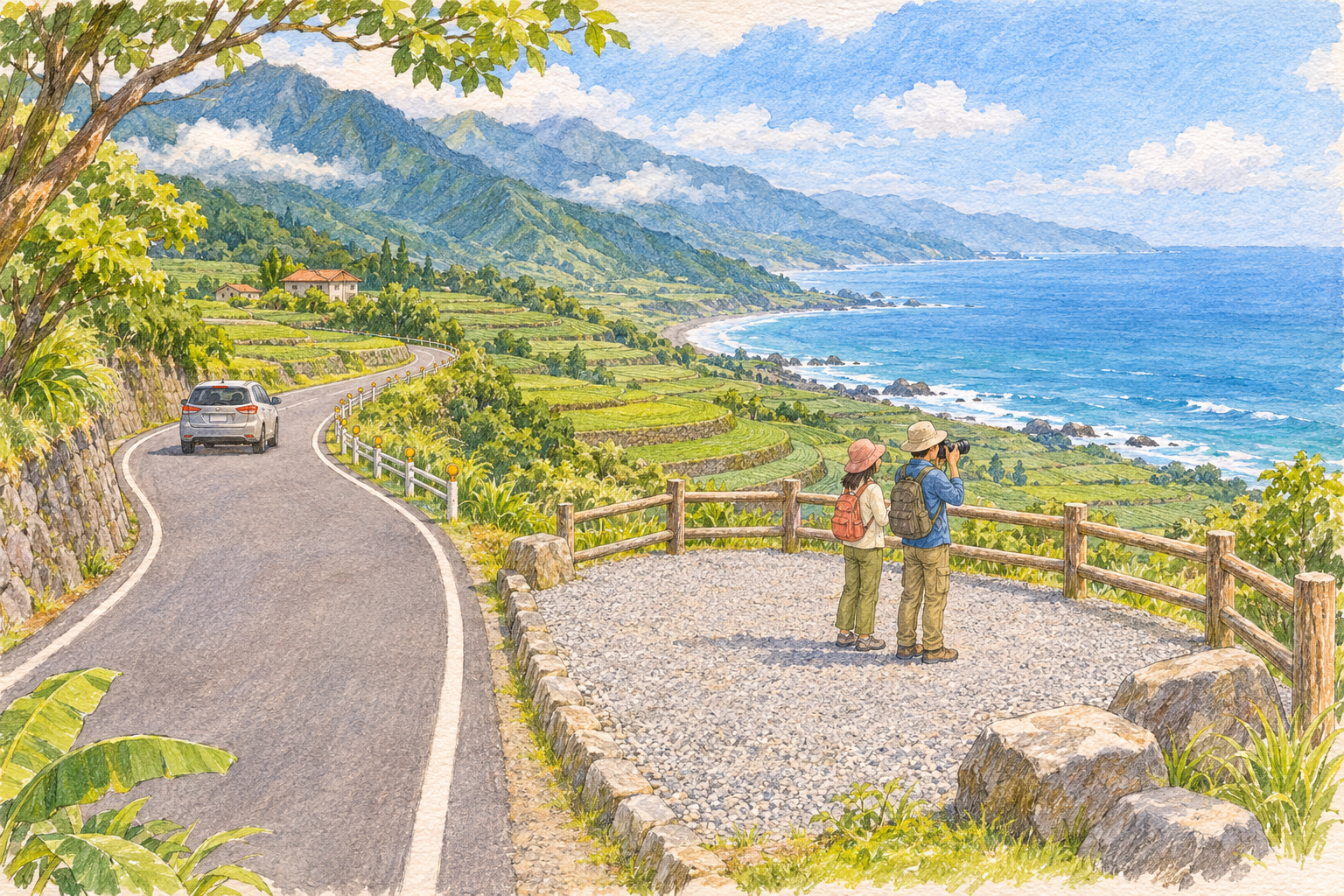
The same report relays advice for both groups using the road. Visitors should choose a safe position that does not obstruct traffic, avoid lingering in a lane and avoid crossing casually for a photograph. Drivers should slow down and watch for people nearby. These are reported police reminders; no new pedestrian-only arrangement is announced in the article.
For a traveler, the useful decision comes before taking out the phone. Find a place where you can stand clear of moving vehicles without entering someone’s field. If there is no clearly safe place for the picture you want, leave that picture untaken. An empty-looking stretch in a photograph cannot tell you whether traffic is approaching outside the frame.
Read the landscape as a place where people live
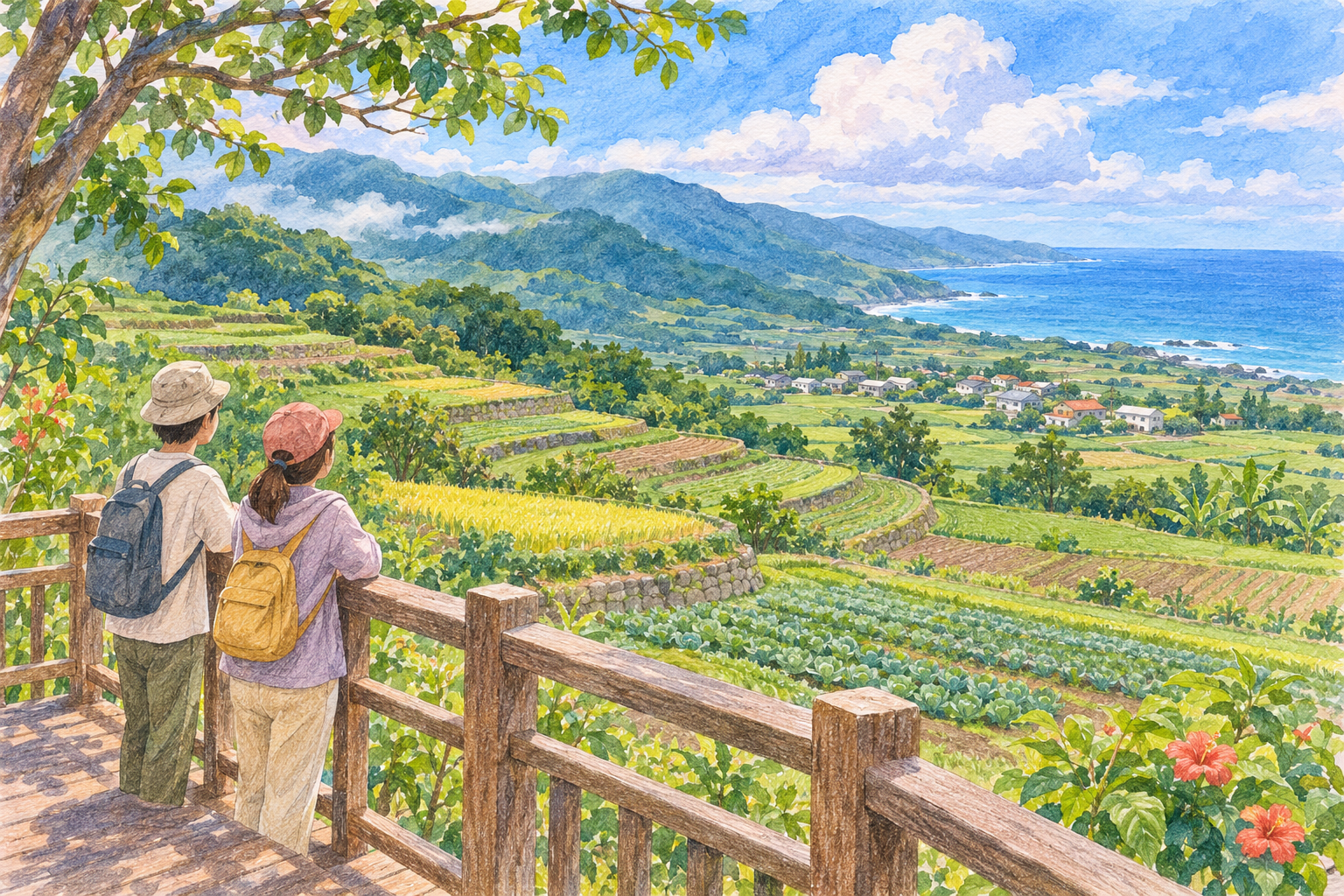
The East Coast National Scenic Area’s official guide places Jingang Boulevard on Dong 13, the Changguang agricultural road, in Changbin Township. It describes terraces between the coastal mountains and the Pacific. Saving the Chinese names 金剛大道 and 長光部落 can help visitors distinguish this destination from other scenic roads when planning the journey.
The official guide identifies Changguang as a predominantly Amis Indigenous community. That background changes how the view should be understood: the fields are part of a cultivated landscape beside an inhabited village. They are more than a convenient foreground for a holiday portrait.
The tourism authority’s separate introduction to Taitung photo spots explicitly asks visitors to stay out of the terraces. Its attraction guide also asks for quiet in residential areas, respect for privacy when photographing people or private property, and care with litter and parking. These existing visitor guidelines support a broader approach to the outing: leave room for farming, everyday movement and residents’ own use of the place.
The attraction guide lists a viewing platform among local facilities. Check signs and the actual situation on arrival rather than assuming every roadside edge provides a safe stopping place. Field colors also belong to an agricultural cycle; an older green or golden landscape image does not promise the same appearance in November.
News publication: 8 November 2026. Official visitor information checked: 8 November 2026, Taiwan time; the attraction page displays an update date of 6 May 2025. This article is based on source research. Both images are newly created illustrations, and neither records current traffic, crop conditions or an on-site visit.