At a marathon in central Taiwan, a refreshment stop can become part of the attraction. Roast duck sliced for runners and freshly cooked chicken put an unusually substantial meal beside the running route. The scene offers overseas readers a different way into Taiwan’s food culture: through a town welcoming people who have come to move through it.
The occasion is the Tianzhong Marathon (田中馬拉松), held in Changhua County on 8 November 2026. In Public Television Service reporting published that day at 12:10 Taiwan time, journalist Zhu Feng-zhi describes about 17,000 participants, plentiful food and a new emphasis on inclusive participation. This article draws on that reporting and official information; it is not an account of a personal visit.
A food stop becomes a meeting point
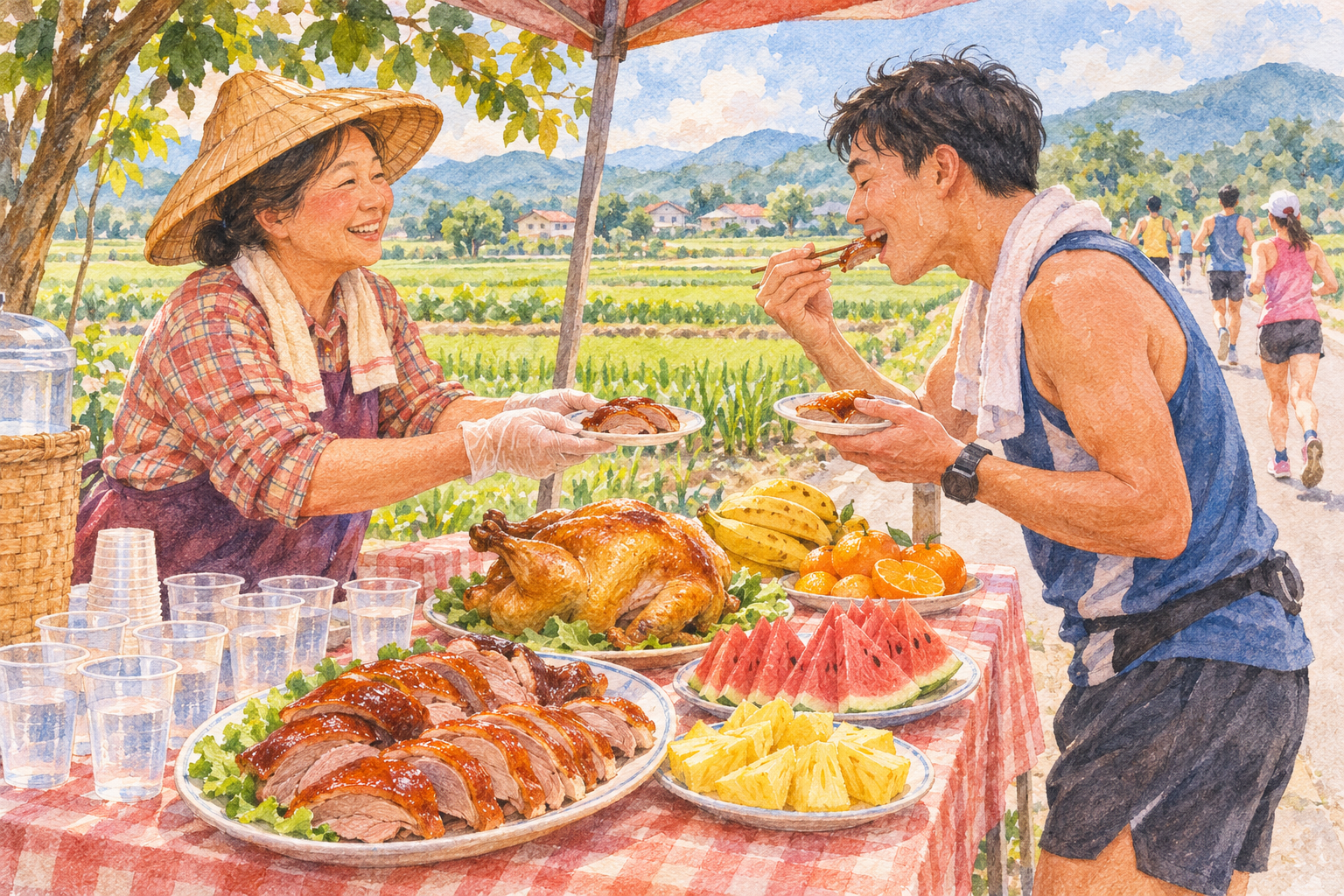
PTS’s race-day account describes roast duck, barrel-roasted chicken and roast suckling pig among the offerings. It also shows runners pausing to eat, with one bringing a bowl. These are observations from this year’s report, rather than a menu promised for a future edition or a suggestion that every refreshment station serves the same dishes.
For a first-time reader of Taiwanese food coverage, 桶仔雞 refers here to the barrel-roasted chicken named in the report, while 補給站 means a race refreshment or aid station. The language matters: this is food provided within an organized sporting event. The article does not establish that an unregistered visitor can simply arrive and claim the runners’ meals.
The organizers’ 2026 regulations explain the setting. They describe a race intended to connect sport, leisure and local agriculture, with rice-growing scenery and irrigation landscapes among its attractions. They also encourage participants to appreciate the place rather than approach it only as a speed contest. That is the organizers’ stated purpose, not a guarantee of any individual runner’s experience.
Together, the food and that stated purpose suggest why this race can interest someone who usually travels by restaurant recommendation. A dish is encountered alongside volunteers, other participants and the surrounding farming town. Hospitality becomes something people take part in, as well as something they eat. That is an interpretation of the event’s format, rather than a claim that one race represents every Taiwanese community.
Participation needs practical support
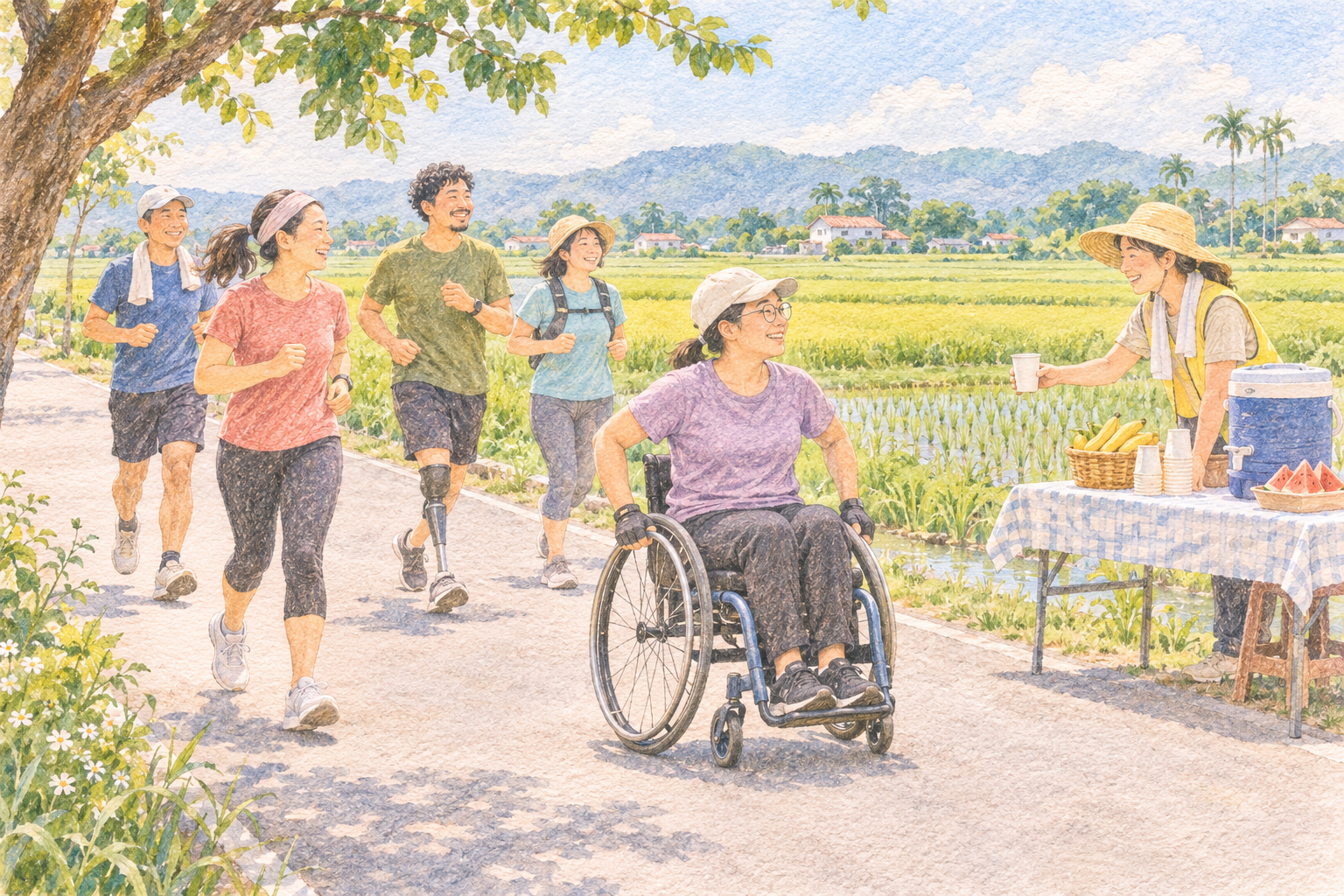
The Changhua County Government’s 8 November account confirms that the race took place that morning. It describes residents and volunteers contributing to cheering, food provision and services, and says this year’s arrangements included accessible circulation, lower service counters, a dedicated friendly refreshment area and volunteer training. These are the county’s descriptions; this article has not independently audited the course’s accessibility.
PTS highlights the new inclusive group, while the organizers’ regulations distinguish several race categories and set eligibility conditions for the friendly fun-run category. Those conditions are a reminder that inclusion involves specific arrangements. Anyone considering a later edition should consult its own entry rules and contact the organizers about support needs, rather than assume that a photograph or an earlier category name settles those questions.
The wider cultural point is the connection between welcome and participation. Generous food makes a vivid news image; a counter someone can reach and volunteers prepared to help address a different part of joining in. Reading the two together gives a fuller view of the town’s event, without turning the reported measures into a promise that every barrier has been removed.
For readers discovering Tianzhong through this report, the 2026 race is a dated event, not an invitation to enter after the fact. The registration page records an earlier application period and says entries have closed. No future race date, available place, entry price or special transport service is promised here. Save the Chinese place name 田中 when researching the town, and use the official race website for later announcements.
News publication and official information checked: 8 November 2026, Taiwan time. The organizers’ earlier regulations provide background; the new reporting concerns the race held that morning. Both images were created on 8 November as original AI illustrations. They show imagined people, food and settings, not the actual course or current facilities.