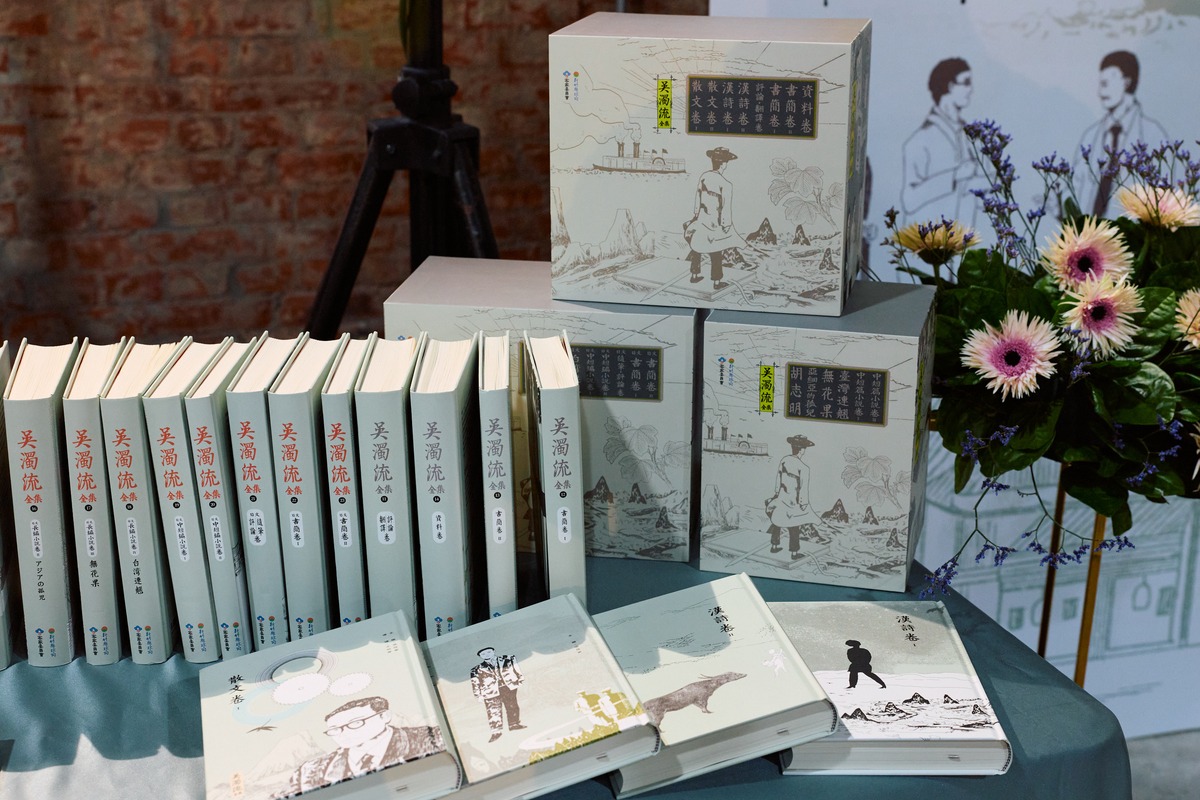
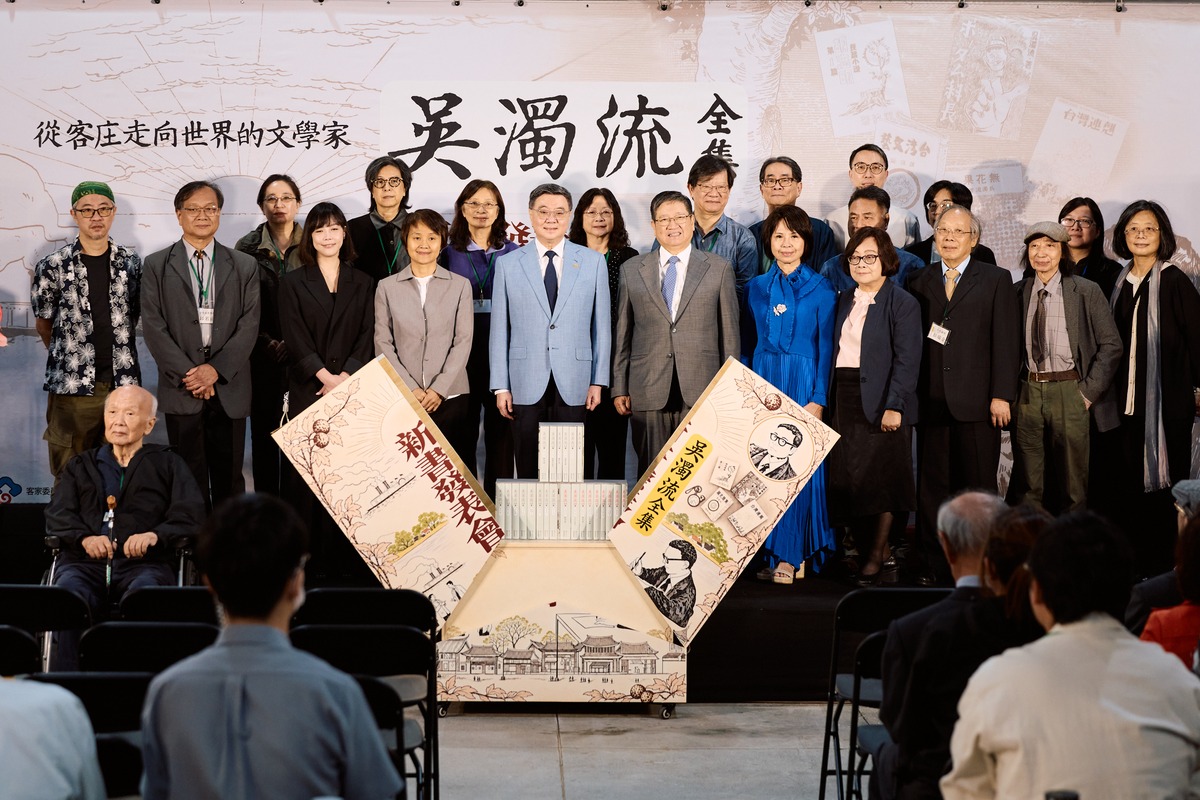
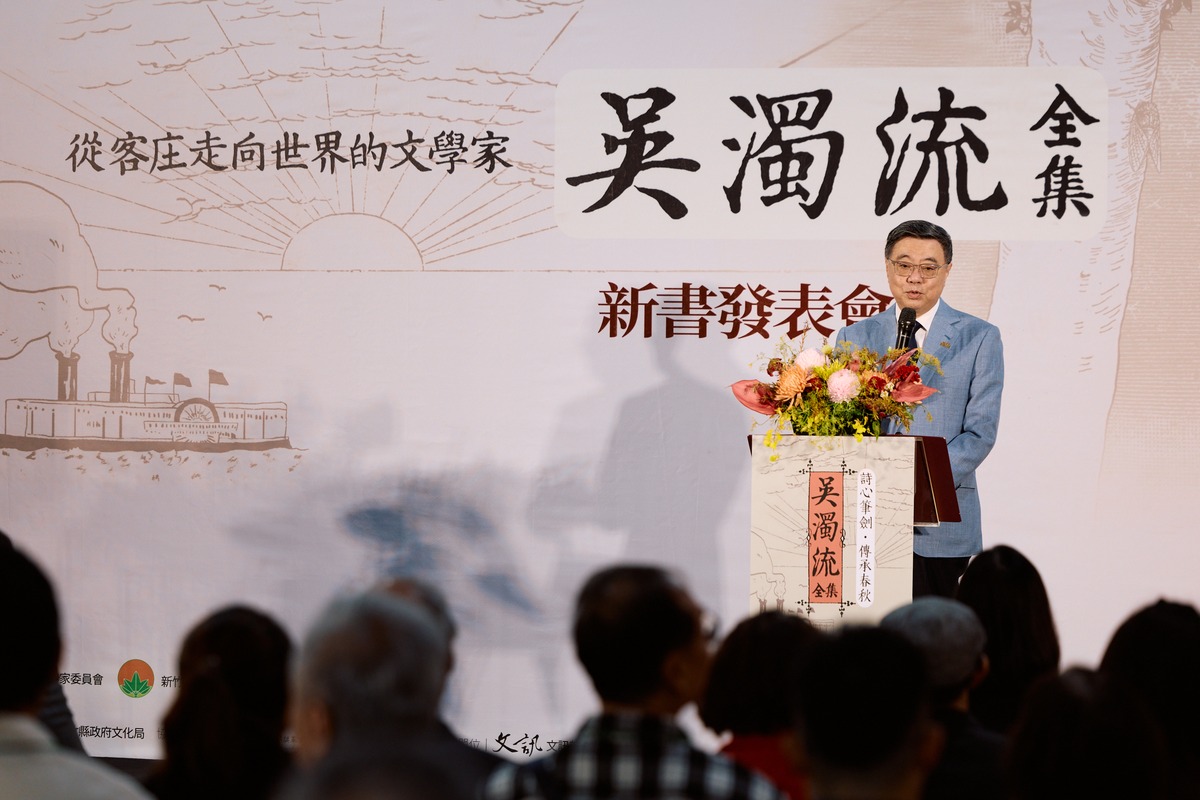
Taiwan’s literary history cannot be fitted neatly onto a shelf marked with a single language. A new collection of Wu Zhuoliu’s work makes that complexity tangible, bringing Chinese and Japanese texts into a 23-book set formally presented at Taipei’s Huashan 1914 Creative Park on November 18, 2026.
The publication brings together the Hakka Affairs Council, Hsinchu County Government and the Wu Zhuoliu Literary Award Foundation. Its 11 volumes contain 14 Chinese-language books and nine Japanese-language books. For readers encountering Taiwan through its food, streets or landscapes, this is another route into the island, through the words people used to describe their lives.
An archive rebuilt across languages
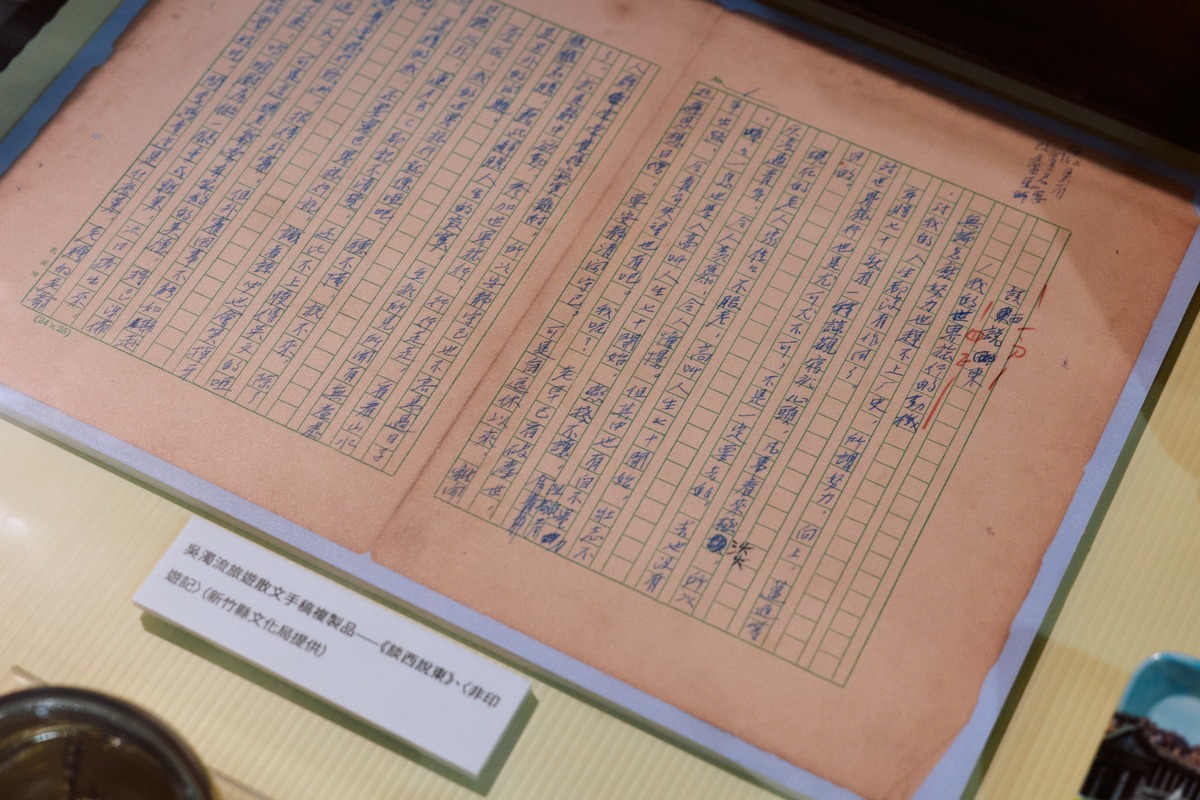
Wu, who lived from 1900 to 1976, came from Xinpu in Hsinchu. His writing crossed the boundary between Taiwan’s Japanese colonial period and its postwar society. Preserving that work therefore involves more than assembling familiar titles. It also means deciding how different editions, scripts and translations should sit alongside one another.
The county’s Cultural Affairs Bureau says the editors gathered material from periodicals, overseas publications and unpublished manuscripts, then checked and retranslated texts. The set includes both Hu Zhiming and Orphan of Asia, versions whose differences can disappear when they are treated as interchangeable titles. Japanese volumes use modern kana and character forms, while added notes explain Hakka expressions and customs.
Those choices give the collection a practical purpose as well as a commemorative one. A reader comparing versions can ask what changed between them; a reader unfamiliar with a local expression has somewhere to begin. The significance lies in the editorial work that makes those questions possible.
The family work behind a literary institution
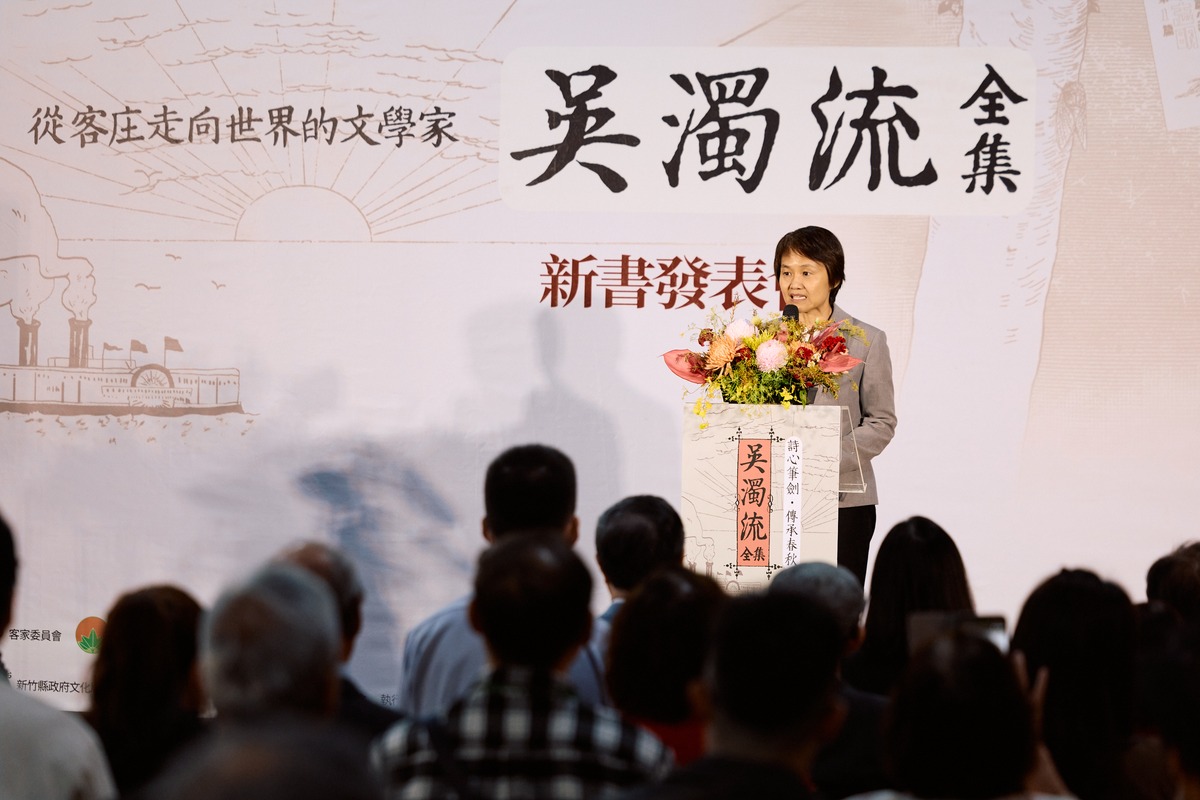
Wu’s legacy also passed through ordinary domestic labour. At the launch, his granddaughter Wu Xingcun recalled that the children helped bind and bag issues of the magazine he founded, Taiwan Literature. As a child, she did not yet understand the effort represented by those freshly printed pages. Her account, carried by CNA and republished by UDN, brings the institution back to a family’s hands.
Wu established the magazine in 1964. After his death, his son Wu Wanxin continued supporting the literary undertaking, with encouragement from writer Chung Chao-cheng. His granddaughter described her father using personal savings to sustain younger writers. This is a recollection offered by the family, rather than an independently audited financial history.
Seen together, the edited books and that recollection suggest two kinds of preservation. One keeps manuscripts and versions available for study. The other keeps a place open for people who have yet to publish their own work.
An English doorway into the reading
English readers already have an entry point in Orphan of Asia, translated by Ioannis Mentzas and published by Columbia University Press. Originally written in Japanese, the novel follows Hu Taiming through experiences in Taiwan, Japan and mainland China. Its publisher describes a protagonist whose education and travels deepen his difficulty finding a place to belong.
That English edition is separate from the new Chinese and Japanese collected works. Reading it can introduce Wu’s narrative world, but it does not provide the full archive, correspondence or edition comparisons assembled in the 2026 set. Nor does the new publication announce an English translation of the complete collection.
The Hakka Affairs Council has also described plans to connect literature with communities, schools and libraries through storytelling, literary walks and adaptations into other media. These are stated directions for outreach; the launch material does not supply a complete public programme. Readers seeking an event or a copy of the new set should check the organisers’ current information rather than assume a walk, exhibition or library holding is available.
The November 18 launch marks the collection’s arrival after earlier publication plans. This report was checked on November 22, 2026. It draws on published records and makes no claim of attendance, a personal reading of all 23 books, or verification of stock and retail prices.
Sources and further reading
UDN/CNA, November 18 report and family recollections
Hakka Affairs Council, launch statement and five-photo gallery
Hsinchu County Cultural Affairs Bureau, editorial details
Columbia University Press, Orphan of Asia and English translator